Roofers in Dover
Roofers covering Dover and the surrounding villages. Re-roofing, slate and tile work, storm damage repairs and fibreglass flat roofs. Free survey.
Looking for roofing services in Dover?
Dover is a town built into a gap in the cliffs, and that geography shapes everything about roofing here. Streets climb steeply up both sides of the Dour valley, houses sit at awkward angles on hillsides, and the wind funnels through the valley from the Channel in a way that few other Kent towns experience.
Add to that a building stock that ranges from Victorian terraces to substantial post-war rebuilding, and there's very little standard about a Dover roof.
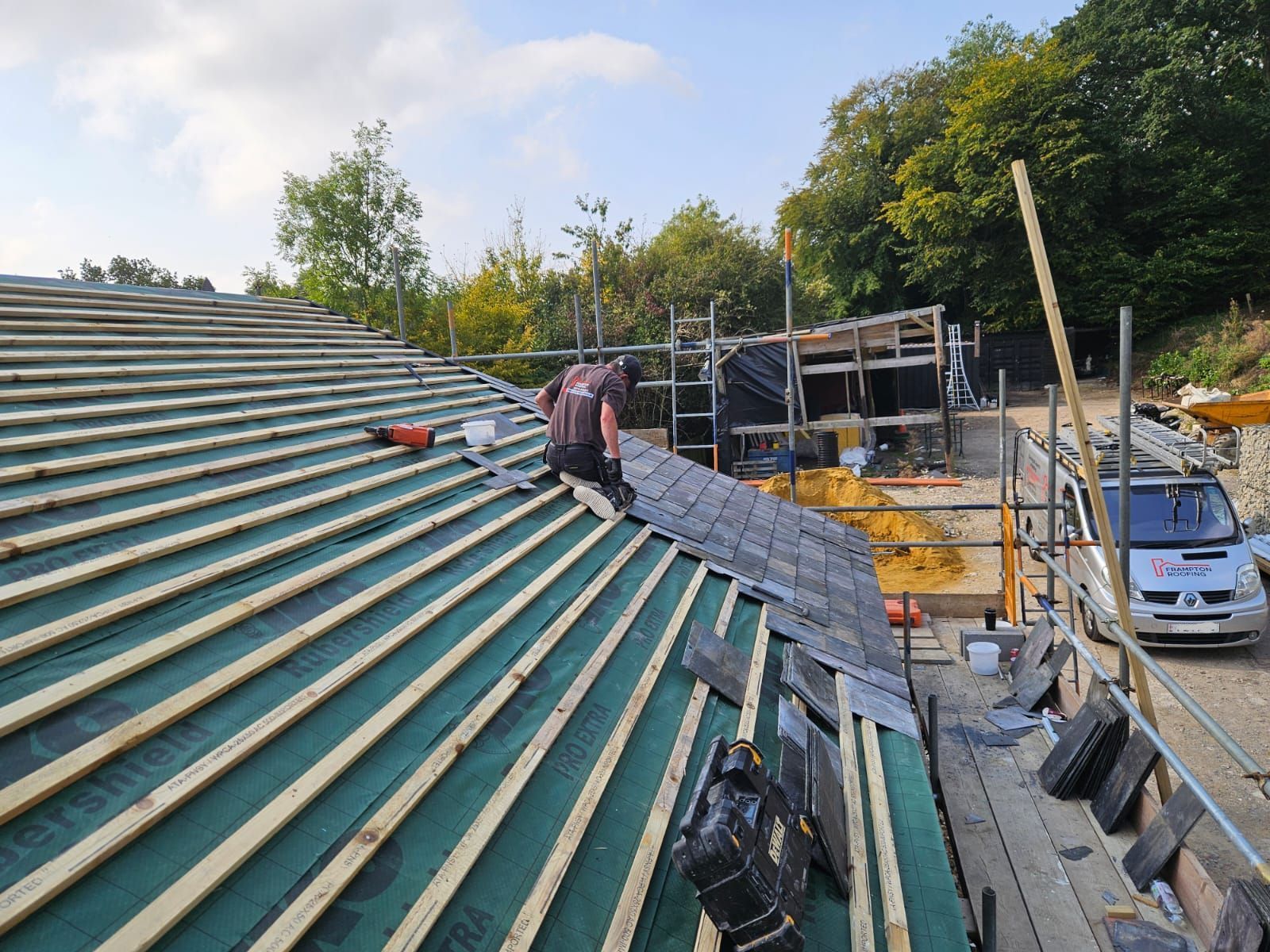
We cover Dover and the villages inland — including Barham, where our Welsh slate project was.
Wind, hills and chalk
The wind is the first thing to understand. Dover sits at the narrowest point of the Channel with the valley acting as a funnel, and gusts here regularly exceed what the same weather system delivers a few miles inland. Roofs lose ridge tiles, hip tiles and verge courses more often than almost anywhere else we work. Anything at an edge or an exposed corner needs to be mechanically fixed rather than simply bedded, and a lot of older Dover roofs were never detailed for the wind they actually get.
The topography makes the work harder too. Properties on the valley sides often have restricted access, steep approaches, retaining walls and neighbouring roofs at completely different levels. Scaffolding on a Dover hillside terrace takes planning. It's another reason getting the roof properly inspected is often the sensible first move — you find out what you're dealing with before anyone commits to access costs.
The building stock splits fairly clearly. There are Victorian and Edwardian terraces with slate and clay tile, particularly on the hillsides and around the older centre. There's also a significant amount of post-war housing, because Dover was heavily damaged during the war and much of the town was rebuilt afterwards. That later stock tends to be concrete tile with shallower pitches, plus the flat-roofed additions of the sixties and seventies now due replacement.
Being on chalk downland, exposure to salt is high near the front and drops off quickly inland — a house up at Whitfield has a considerably easier life than one on the seafront.

Broadstairs
Margate
Ramsgate
Thanet