Roofers in Sandwich

Roofers in Sandwich for medieval and listed properties, clay peg tiles, valleys and leadwork, plus fibreglass flat roofs. Local Kent firm. Free survey.

Looking for roofing services in Sandwich?

Sandwich is one of the best-preserved medieval towns in England, and roofing there is a genuinely specialist business. Timber-framed buildings, jettied upper floors, listed properties on almost every street, and roof structures that have been altered and added to for six or seven hundred years.

Very little of it is square, level or standard. Which is exactly what makes it interesting.

We cover Sandwich, the surrounding villages and out towards the coast at Sandwich Bay.

Medieval roofs need a different approach

On Strand Street and the streets around it you're working on buildings that predate almost everything a modern roofer normally encounters. Timber frames have moved and settled over centuries, so ridges undulate, planes twist, and what looks like a simple pitched roof from the street turns out to be three different roofs joined together at odd angles.

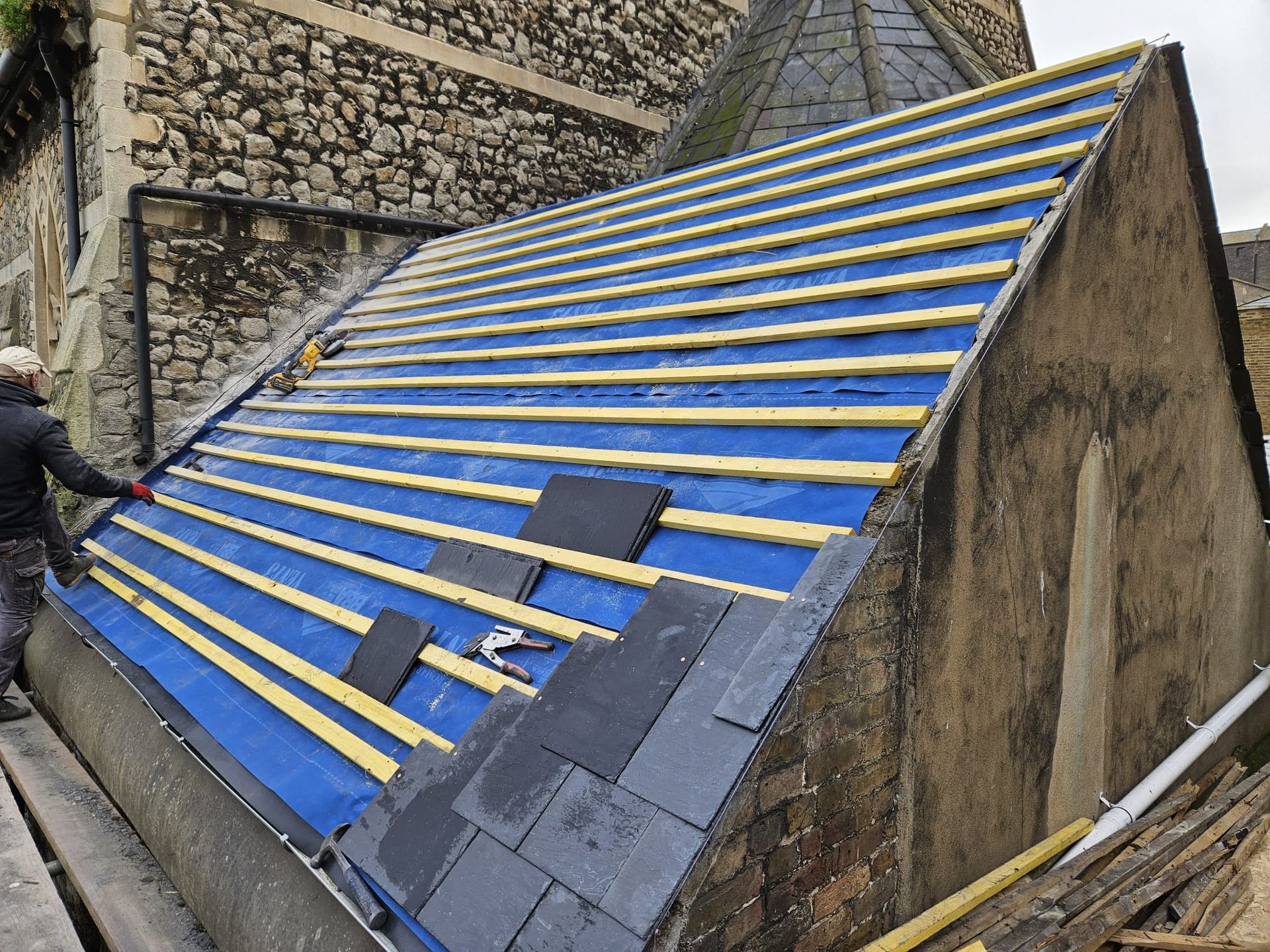
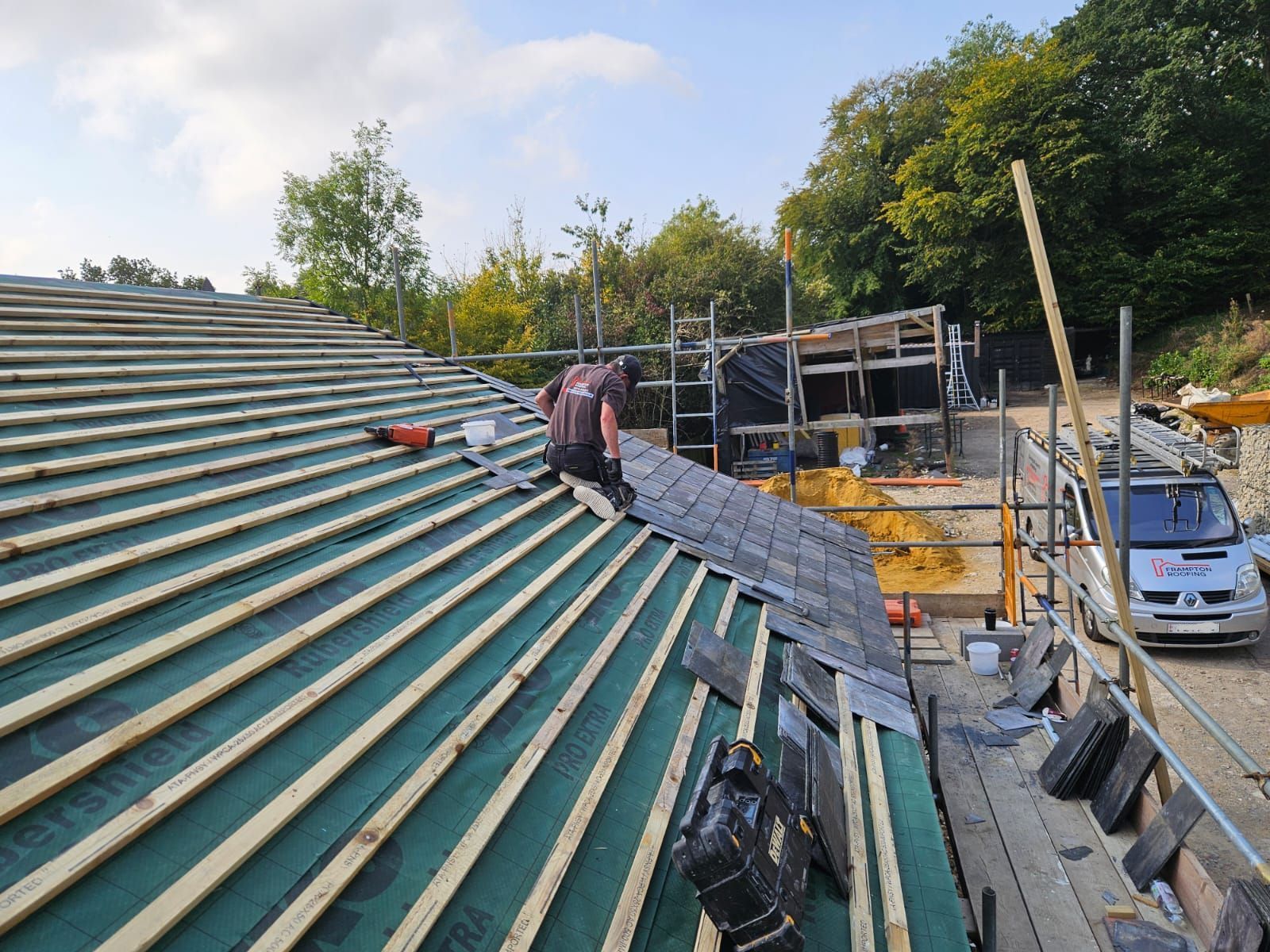
Clay peg tiles are common, hung on oak pegs rather than nailed, and often the originals are worth salvaging and re-laying. Where tiles need making up, they need matching — both because a modern tile looks obviously wrong on a medieval roof, and because listed building consent generally requires it. This isn't work to hurry, and it isn't work for someone who has only ever laid concrete interlocking tiles.

Valleys and junctions are where Sandwich roofs leak. With so many roof planes meeting at irregular angles, there are a great many junctions, and each one is a potential entry point. Historic lead work in these valleys has usually been repaired several times over, sometimes badly, and water can travel a considerable distance through an old timber frame before it appears on a ceiling. Finding the actual source is often most of the job.

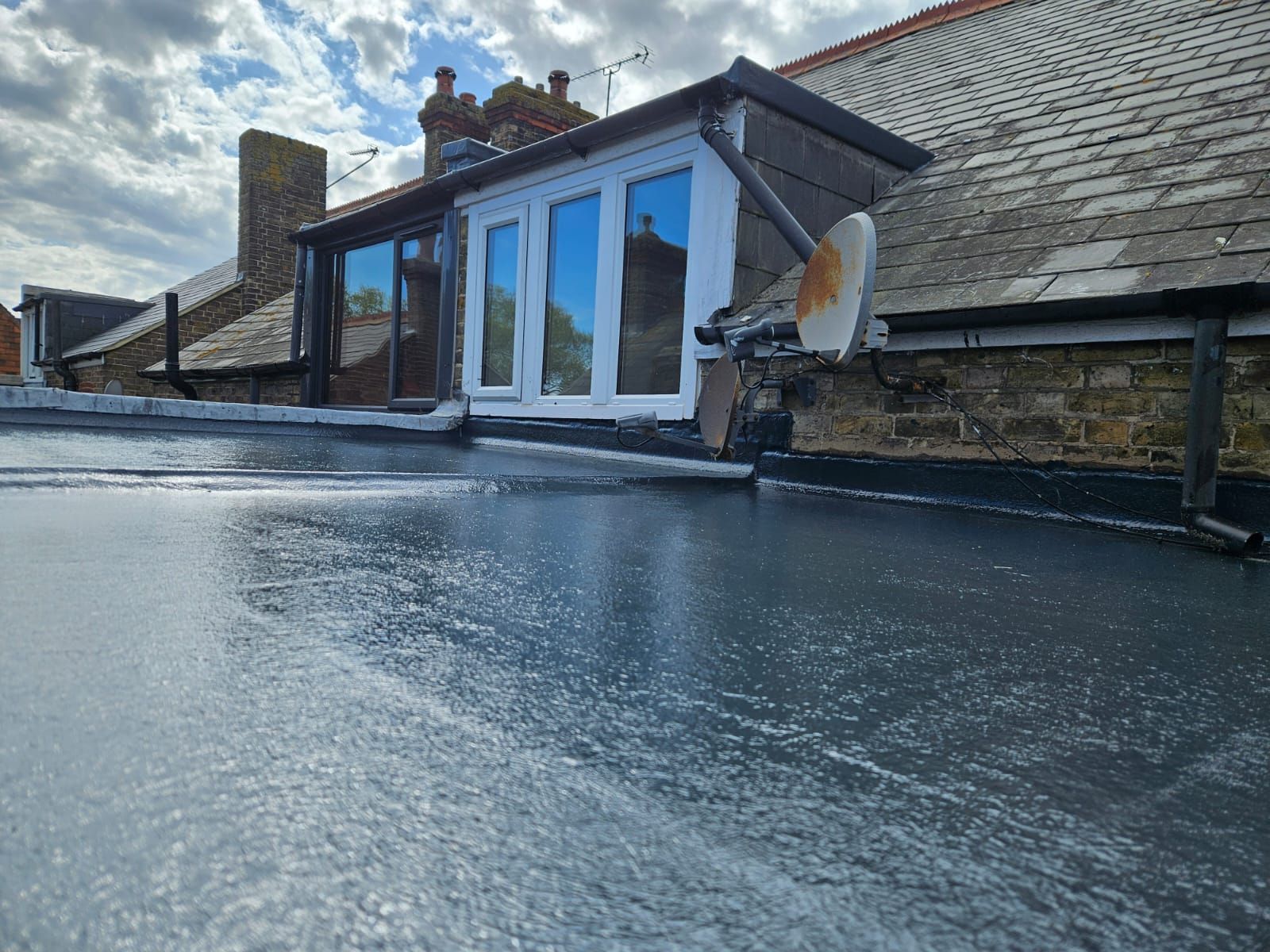
Out at Sandwich Bay and the villages the picture is more conventional — larger properties, better access, and the usual flat roofs on extensions and outbuildings.


Medieval roofs need a different approach

On Strand Street and the streets around it you're working on buildings that predate almost everything a modern roofer normally encounters. Timber frames have moved and settled over centuries, so ridges undulate, planes twist, and what looks like a simple pitched roof from the street turns out to be three different roofs joined together at odd angles.

Clay peg tiles are common, hung on oak pegs rather than nailed, and often the originals are worth salvaging and re-laying. Where tiles need making up, they need matching — both because a modern tile looks obviously wrong on a medieval roof, and because listed building consent generally requires it. This isn't work to hurry, and it isn't work for someone who has only ever laid concrete interlocking tiles.

Valleys and junctions are where Sandwich roofs leak. With so many roof planes meeting at irregular angles, there are a great many junctions, and each one is a potential entry point. Historic lead work in these valleys has usually been repaired several times over, sometimes badly, and water can travel a considerable distance through an old timber frame before it appears on a ceiling. Finding the actual source is often most of the job.

Out at Sandwich Bay and the villages the picture is more conventional — larger properties, better access, and the usual flat roofs on extensions and outbuildings.


What we do in Sandwich


Nearby towns to Sandwich

Featured project

Refurbishing a roof valley

Valleys are the single most relevant piece of work we can show anyone with an older Sandwich property, because that's where these roofs fail.

A valley is where two roof planes meet, and it carries the water off both of them. That makes it the busiest and most vulnerable detail on the whole roof. On an old building with an irregular frame, forming one properly means working with the shape the building has actually settled into rather than the shape it was meant to have.

Our write-up covers what's involved in taking one apart and putting it back so it stays watertight. It's slow, careful work, and it's the sort of detail that separates a roof that lasts from one that leaks again in two winters.

TESTIMONIALS

What our customers think

We're rated 5.0 out of 5 from over 100 Google reviews and were a Nextdoor Neighbourhood Faves winner in 2023.

On a listed building we'd always rather come and look, talk it through and quote properly than give you a number over the phone.

GET IN TOUCH

Get a free roof survey in Sandwich

Old buildings deserve someone who'll take the time. Give us a ring and we'll come out, work out where the water is actually getting in, and put an honest estimate together.

Frampton Roofing Ltd
Call Colin on 07771 269291
Email info@framptonroofing.uk
Broadstairs, Kent

Frequently Asked Questions

Questions we get asked in Sandwich

Here are a few frequently asked questions we get from customers in Sandwich. If you have another question in mind, please do get in touch and let us know, we'll do our best to answer!

My building is listed. Do you work on listed properties?

Regularly. The practical difference is that materials have to be matched rather than substituted, and consents need to be in place before work starts. We salvage and re-lay original peg tiles wherever they're sound and make up the shortfall with matched reclaimed stock. It takes longer, and the quote reflects that.

The damp is in one room but you say the leak is somewhere else. How?

Because on a medieval timber frame, water travels. It enters at a valley or a junction, runs along a beam or a rafter, and drops somewhere entirely different. With multiple roof planes meeting at irregular angles there are a lot of possible entry points, and tracing it back is genuinely most of the work. Sealing whatever is nearest to the stain usually fixes nothing.

My roof is uneven and the ridge dips. Is that a structural problem?

Not necessarily. On a six-hundred-year-old frame, some settlement is normal and the building has long since found its shape. What matters is whether it's still moving and whether the covering follows the shape properly. We'd rather work with the shape the building has settled into than try to force it back to level.

Can you inspect it without walking on it?

Yes, and on a fragile historic roof that's the right approach. We inspect it carefully, photograph every valley and junction, and go through the pictures with you.

Still have a question?

Roofing services in kent

Our Areas of Service

Along with Sandwich, we work across many different areas of Kent. If your area isn't listed here, please drop us a line.