Roofers in Canterbury

Roofers covering Canterbury and the surrounding villages. Welsh slate, Kent peg tiles, conservation work, fibreglass flat roofs and repairs. Free survey.

Looking for roofing services in Canterbury?

Canterbury is a change of pace from the coast, and we enjoy the work here for exactly that reason. Less salt, more history. Instead of wind-stripped seafront terraces you're dealing with medieval and Georgian buildings, conservation areas, Kent peg tiles and roofs that have been repaired and re-repaired for centuries.

We cover the city and the villages around it — Barham, Bridge, Bekesbourne, Chartham, Sturry and out towards the coast. Our Welsh slate project in Barham is a good example of what that work looks like.

It's about half an hour from Broadstairs, and well within our patch.

Roofing around Canterbury

The historic centre is its own discipline. Listed buildings, conservation areas and planning constraints mean you can't simply put back whatever is cheapest — what comes off usually has to be matched with something equivalent, and sometimes the original materials are salvaged and re-laid. Kent peg tiles are common on the older buildings, hung on oak pegs exactly as they have been for hundreds of years, and they need someone who has handled them before.

Roof structures in the old city tend to be steep, irregular and full of junctions — valleys, hips, dormers and additions built across several centuries. Very little of it is square. The leaks are almost always at the junctions rather than in the middle of a slope.

Out in the villages you get a wider mix: brick and flint cottages with clay tile, Victorian and Edwardian houses, farm buildings, and modern estates on the city edge with concrete tiles and standard trusses.

Being inland changes what fails. There's far less salt corrosion than we see in Thanet, but a great deal more tree cover — which means leaf-blocked gutters and valleys, moss growth holding damp against the tiles, and overhanging branches lifting and cracking them in high wind. Gutter and valley maintenance matters more here than almost anywhere else we work.


Roofing around Canterbury

The historic centre is its own discipline. Listed buildings, conservation areas and planning constraints mean you can't simply put back whatever is cheapest — what comes off usually has to be matched with something equivalent, and sometimes the original materials are salvaged and re-laid. Kent peg tiles are common on the older buildings, hung on oak pegs exactly as they have been for hundreds of years, and they need someone who has handled them before.

Roof structures in the old city tend to be steep, irregular and full of junctions — valleys, hips, dormers and additions built across several centuries. Very little of it is square. The leaks are almost always at the junctions rather than in the middle of a slope.

Out in the villages you get a wider mix: brick and flint cottages with clay tile, Victorian and Edwardian houses, farm buildings, and modern estates on the city edge with concrete tiles and standard trusses.

Being inland changes what fails. There's far less salt corrosion than we see in Thanet, but a great deal more tree cover — which means leaf-blocked gutters and valleys, moss growth holding damp against the tiles, and overhanging branches lifting and cracking them in high wind. Gutter and valley maintenance matters more here than almost anywhere else we work.


What we do in Canterbury


Nearby towns to Canterbury

Featured project

A Welsh slate project in Barham, Canterbury

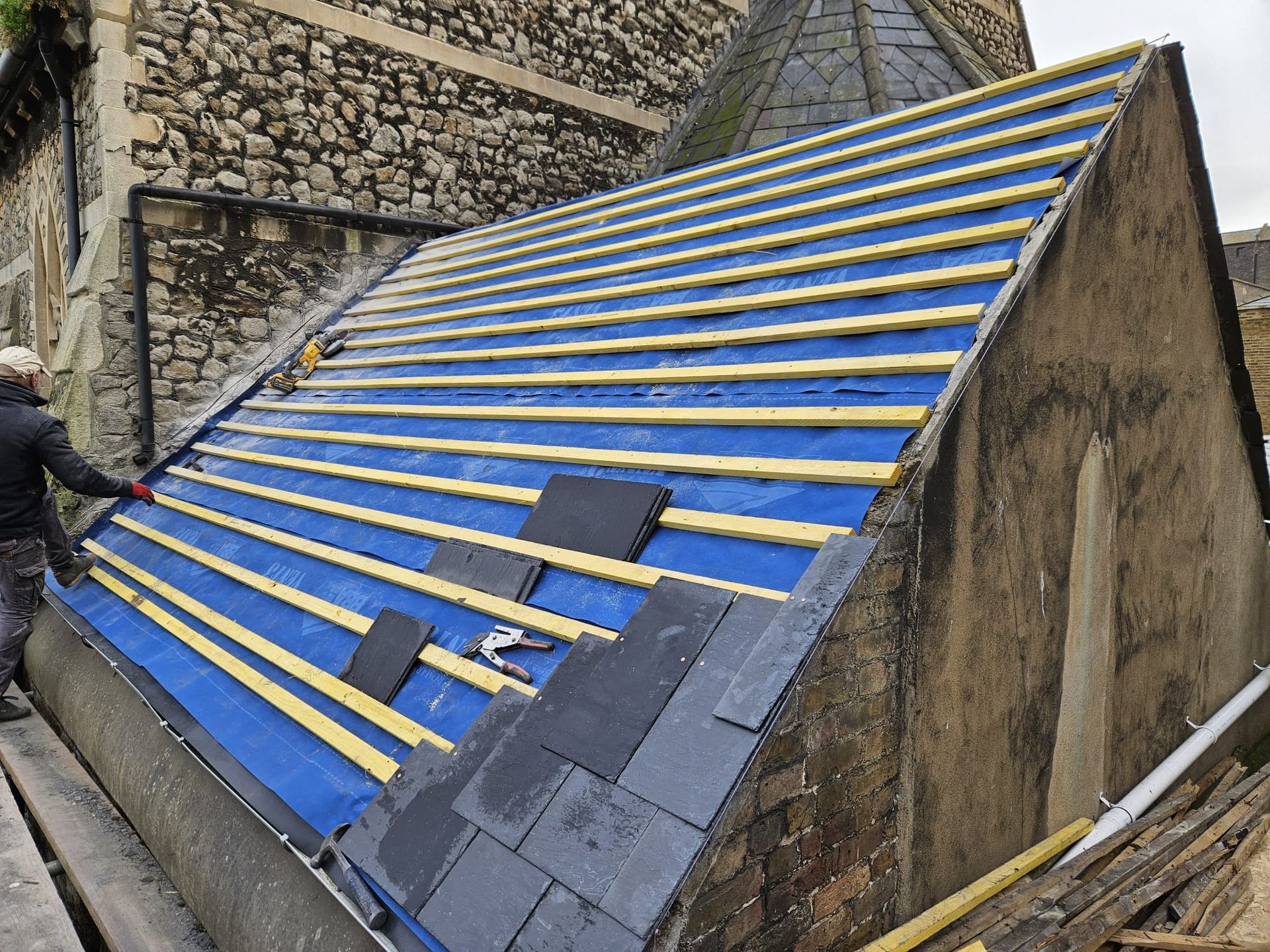
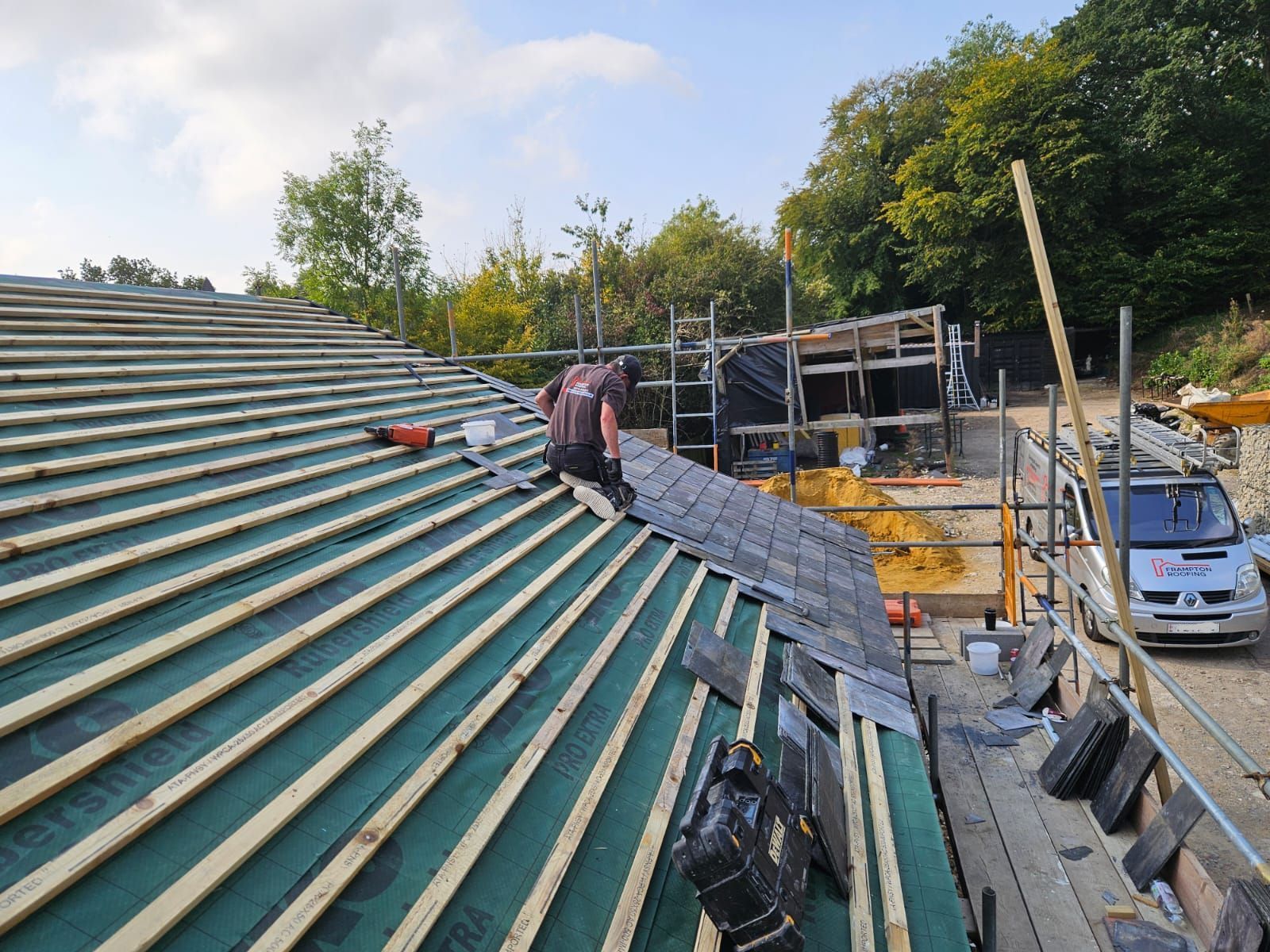
Our project at Barham, just outside Canterbury, used reclaimed Welsh slate — a material with a long history in this country and a very different character to the Spanish slate we fit more often on the coast.

Working with historical slate means accepting that no two pieces are identical. Sorting, grading and laying it so the finished roof is even takes considerably longer than laying new, and there is no rushing it. The reward is a roof that looks like it belongs on the building rather than something that was bolted on last year.

It also makes sense environmentally. Reclaimed slate that has already lasted a century will comfortably last another.

TESTIMONIALS

What our customers think

We're rated 5.0 out of 5 from over 100 Google reviews and were a Nextdoor Neighbourhood Faves winner in 2023.

We're a Thanet firm working into Canterbury, not a national outfit with a Canterbury phone number. You'll get Colin either way.

GET IN TOUCH

Get a free roof survey in Canterbury

Whether it's a peg-tiled cottage in a conservation area or a flat roof on a modern extension, we'll come and look and give you an honest assessment in writing.

Frampton Roofing Ltd
Call Colin on 07771 269291
Email info@framptonroofing.uk
Broadstairs, Kent

Frequently Asked Questions

Questions we get asked in Canterbury

Here are a few frequently asked questions we get from customers in Canterbury. If you have another question in mind, please do get in touch and let us know, we'll do our best to answer!

My house is listed. Can you work on it?

Yes, we do it regularly. The main difference is that materials have to be matched rather than substituted — peg tiles go back as peg tiles, slate as slate. Where the originals are sound we salvage and re-lay them and make up the shortfall with matched reclaimed stock. It takes longer and costs more than a modern re-cover, and any quote that doesn't reflect that is worth a second look.

Do you cover the villages as well as the city?

We do — Barham, Bridge, Bekesbourne, Chartham, Sturry and the surrounding lanes. Our reclaimed Welsh slate project was at Barham, just outside the city.

Why is there so much moss on my roof here?

Tree cover and shelter. Inland Canterbury roofs stay damper for longer than the wind-scoured coastal ones, and mature trees keep them shaded. Moss itself won't destroy a roof overnight, but it holds moisture against the tiles and blocks valleys and gutters, and that's what causes the damage. Clearing gutters and valleys annually does far more good here than anywhere on the coast.

My leak seems to move around. Is that possible?

On the old city roofs, very much so. With multiple roof planes joined at irregular angles over several centuries, water can enter at one junction and travel a long way through the timber before it drops. Where it appears inside is often nowhere near where it's getting in — finding the actual source is most of the job.

Still have a question?

Roofing services in kent

Our Areas of Service

Along with Canterbury, we work across many different areas of Kent. If your area isn't listed here, please drop us a line.