PROJECT

Fixing a Failing Cement Fillet Roof at Kingsgate

A deteriorated cement fillet at Kingsgate was letting water into the building. We ground it back, reinforced it with fibreglass resin and sealed it properly.

At-a-glance

Location: Kingsgate, Broadstairs, Kent

Property Type:  Domestic — roof-to-wall junction and flat roofs

Service: Cement fillet repair and fibreglass reinforcement

Year: 2023

Duration:

Materials: Suitable render, fibreglass resin, UV-stable topcoat

The brief

Cement fillets are one of the most common things we're called out to on older Thanet property, and Kingsgate has plenty of it.

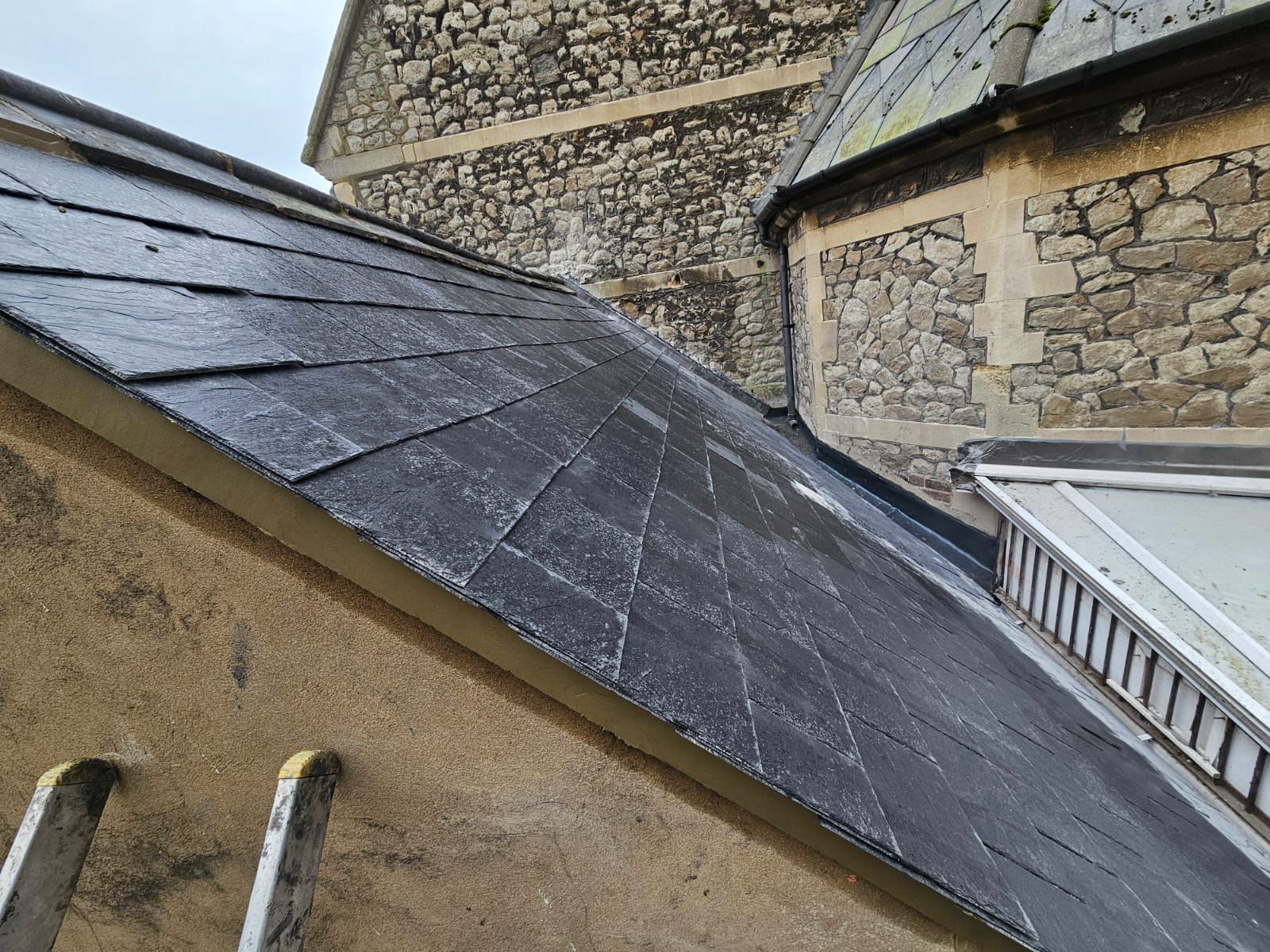
A fillet is the wedge of cement mortar used to seal the gap where a roof meets a wall or a chimney. For decades it was the standard way of closing that junction, and there are thousands of them across this coast. The problem is fundamental rather than accidental: cement is rigid and buildings are not. Over years of thermal movement and settlement, the fillet cracks. It always does.

At this property the fillet had deteriorated to the point where water was getting through, with all the usual consequences — damp, the risk of mould, and steady damage to the fabric behind.

The challenge

The cracks are almost invisible. A failed fillet doesn't look dramatic. From the ground it looks like a slightly grubby line of mortar. The cracks that let water through are often hairline, high up, and nobody sees them until there's a damp patch on a wall inside — by which point water has been getting in for a long time.

Patching it with more cement just resets the clock. The obvious repair is to hack out the failed section and re-render it. That works, for a while, and then the new cement cracks for exactly the same reason the old cement cracked. You've bought a few years, not fixed the problem.

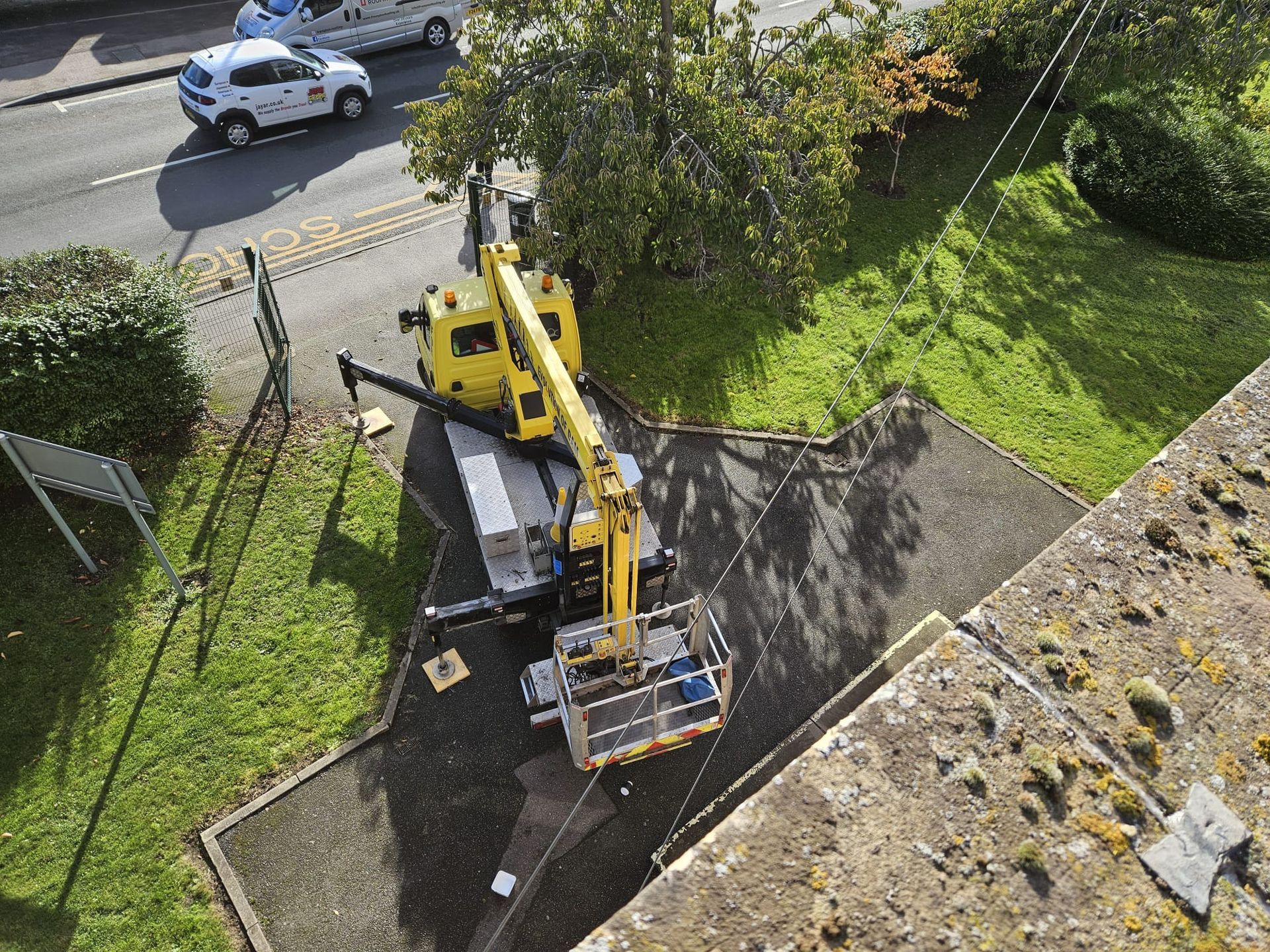
The drainage was part of the picture. Debris had built up on the flat roofs, so water wasn't clearing the way it should. Standing water and a cracked junction is a combination that guarantees a leak.

What we did

  • Ground the damaged cement fillet back into a suitable render, then cleaned and levelled the surface so we had something sound to work onto.
  • Applied fibreglass resin over the junction as a waterproof reinforcement. Unlike cement, it forms a continuous, flexible-enough skin across the detail — there's no joint left for water to exploit.
  • Finished with a UV-stable topcoat, which protects the resin from sunlight and tidies the whole detail up considerably.
  • Cleared accumulated debris from the flat roofs so the drainage worked properly again — because sealing a junction while leaving water sitting against it is only half a repair.

The result

Long-lasting leak protection at the junction, and flat roofs that actually drain.

This is a small job with an outsized effect. The homeowner had a damp problem that was going to keep getting worse and keep costing money in patch repairs. Dealing with the cause — rigid cement on a moving building, plus water that couldn't get away — rather than the symptom is what restored their peace of mind.

If you've got cracked cement around a chimney or where your roof meets a wall, it's worth getting looked at before it becomes a damp problem inside.


TESTIMONIALS

What our customers think

This is the text area for this paragraph. To change it, simply click and start typing. Once you've added your content, you can customize its design by using different colors, fonts, font sizes and bullets. Just highlight the words you want to design and choose from the various options in the text editing bar.

FEATURED PROJECTS

Find out more

Check out our recent projects