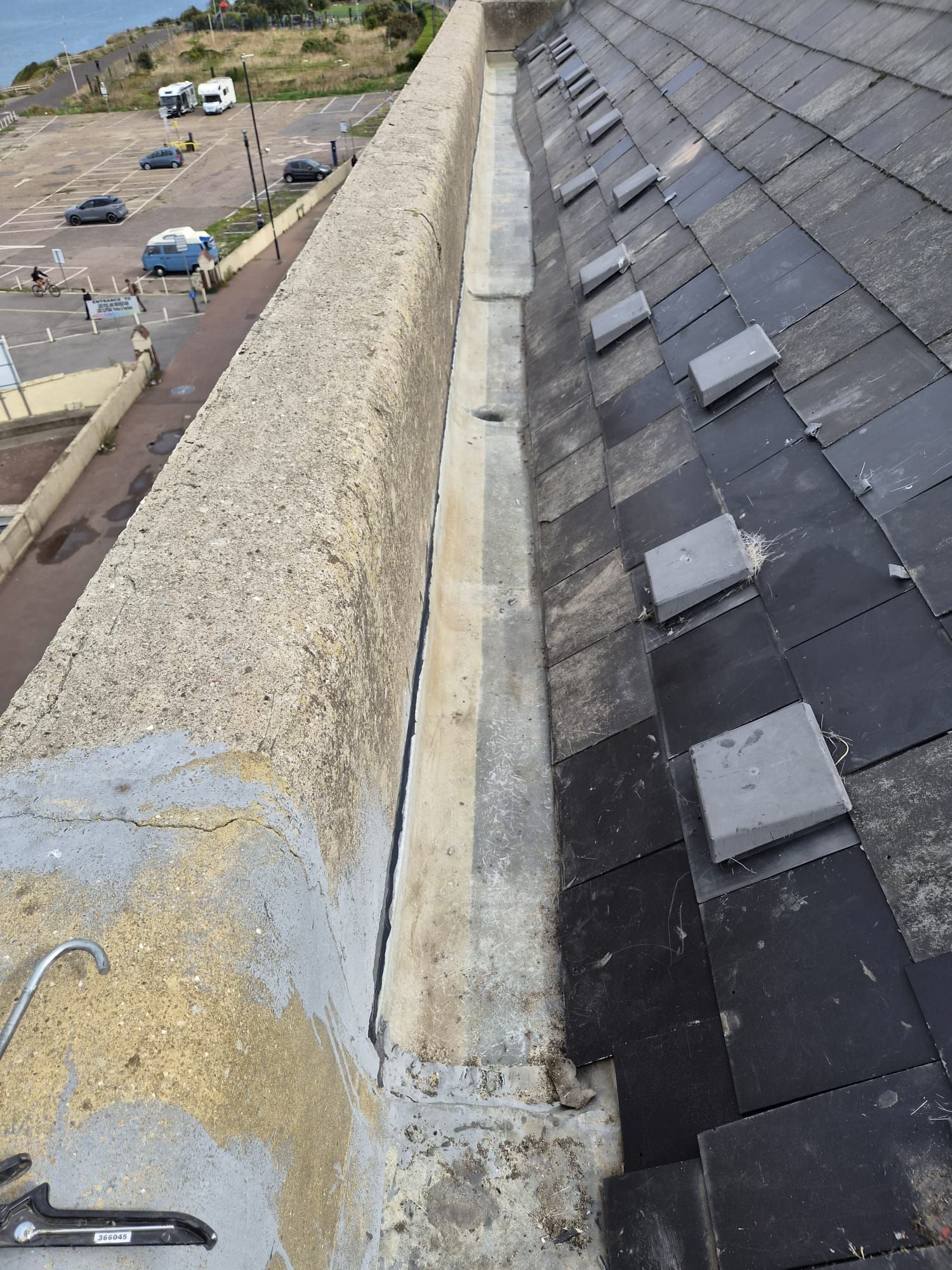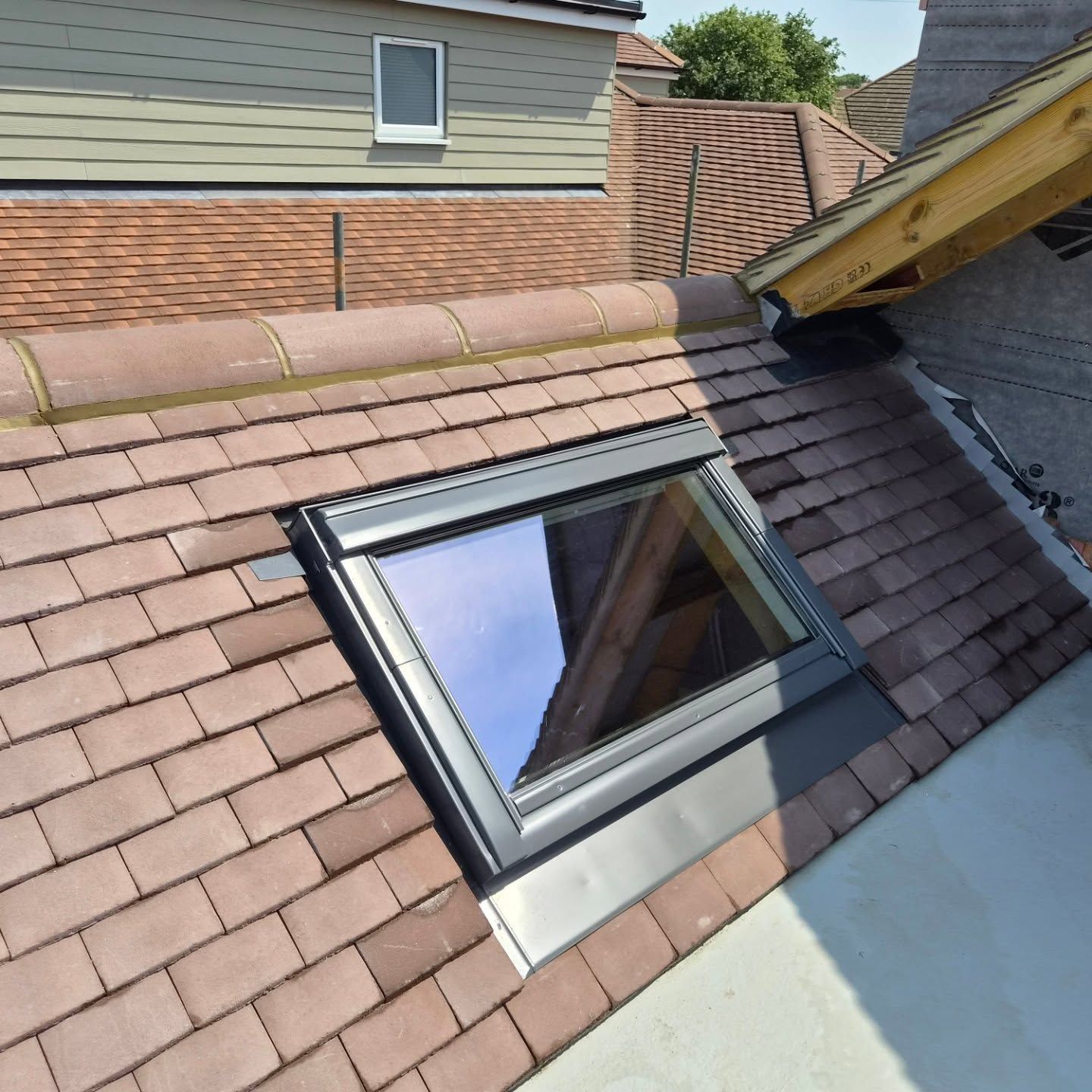
We recently finished a smaller but important job on a terraced roof in Alexander Road, Ramsgate — boxing in the coping wall and upstands along the roof edge, and fitting a new preformed trim and fibreglass finish to tie it all together. It's not the most glamorous part of a roof, but it's exactly the kind of detail that keeps water out for the next twenty years rather than the next two.
Why the roof edge matters
On a lot of the older terraces around Ramsgate and Broadstairs, the roof edge where the tiles meet the party wall coping is one of the first places to let go. Years of moss and lichen build up on the tiles, the pointing on the coping wall opens up, and water starts tracking in behind the brickwork instead of running off the roof. You can see it on this one — the old clay tiles are covered in lichen and moss after years up there, and the coping itself needed boxing in properly rather than just patching.
Our approach is to box the whole edge in with timber, then wrap it in a preformed GRP (fibreglass) trim rather than relying on old lead flashing or mortar fillets that will only need doing again in a few years.
What we did
We boxed in the coping wall and the upstands, and squared off the valley alongside it. Once the timber was labelled up and fixed, we fitted a preformed trim to the outside edge to give it a clean, weathertight line — then finished with a preformed, pre-accelerated polyester resin and fibreglass matting, fully bonded down to form one seamless, waterproof edge.
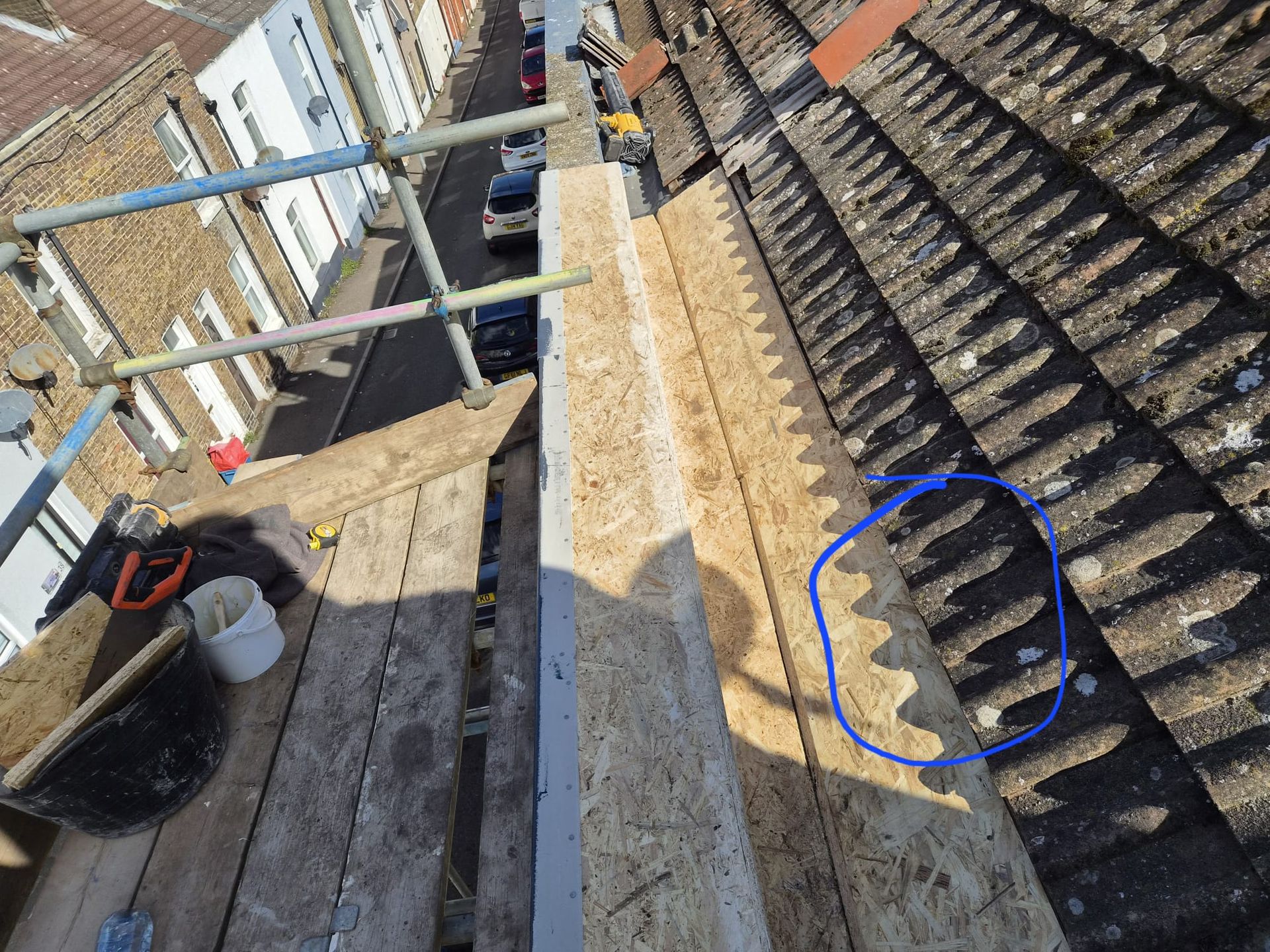
It's a proper belt-and-braces detail: the timber gives the edge its shape and strength, the trim gives it a crisp line, and the resin and fibreglass give it a genuinely seamless, watertight skin with no joints for water to find its way into. Done properly, it should easily outlast the tiles either side of it.
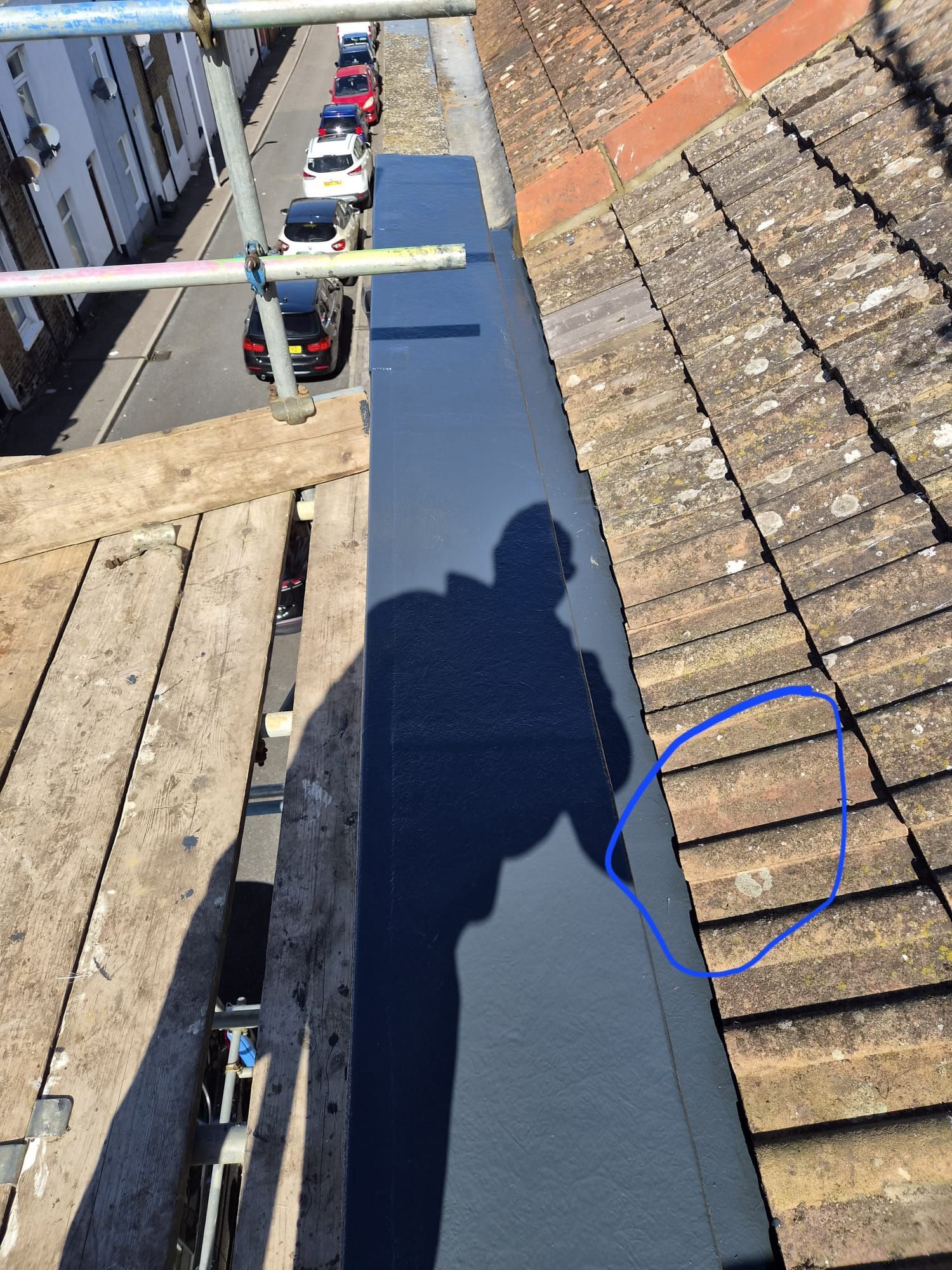
We also flagged a few loose and cracked tiles further along the same roof while we were up there — worth keeping an eye on, even where they're not part of this job. It's the kind of thing that's easy to miss from the ground but obvious once you're stood on the scaffold.
Built to last
Every fibreglass finish we lay comes with our personal 20-year guarantee, and this one's no different — boxed, trimmed and finished properly, so it's not something the next owner has to think about for a very long time.
If you've got a roof edge, parapet or valley on an older property that's starting to look tired, get in touch and we'll take a look. No obligation, no sales patter, just an honest assessment of what it needs.