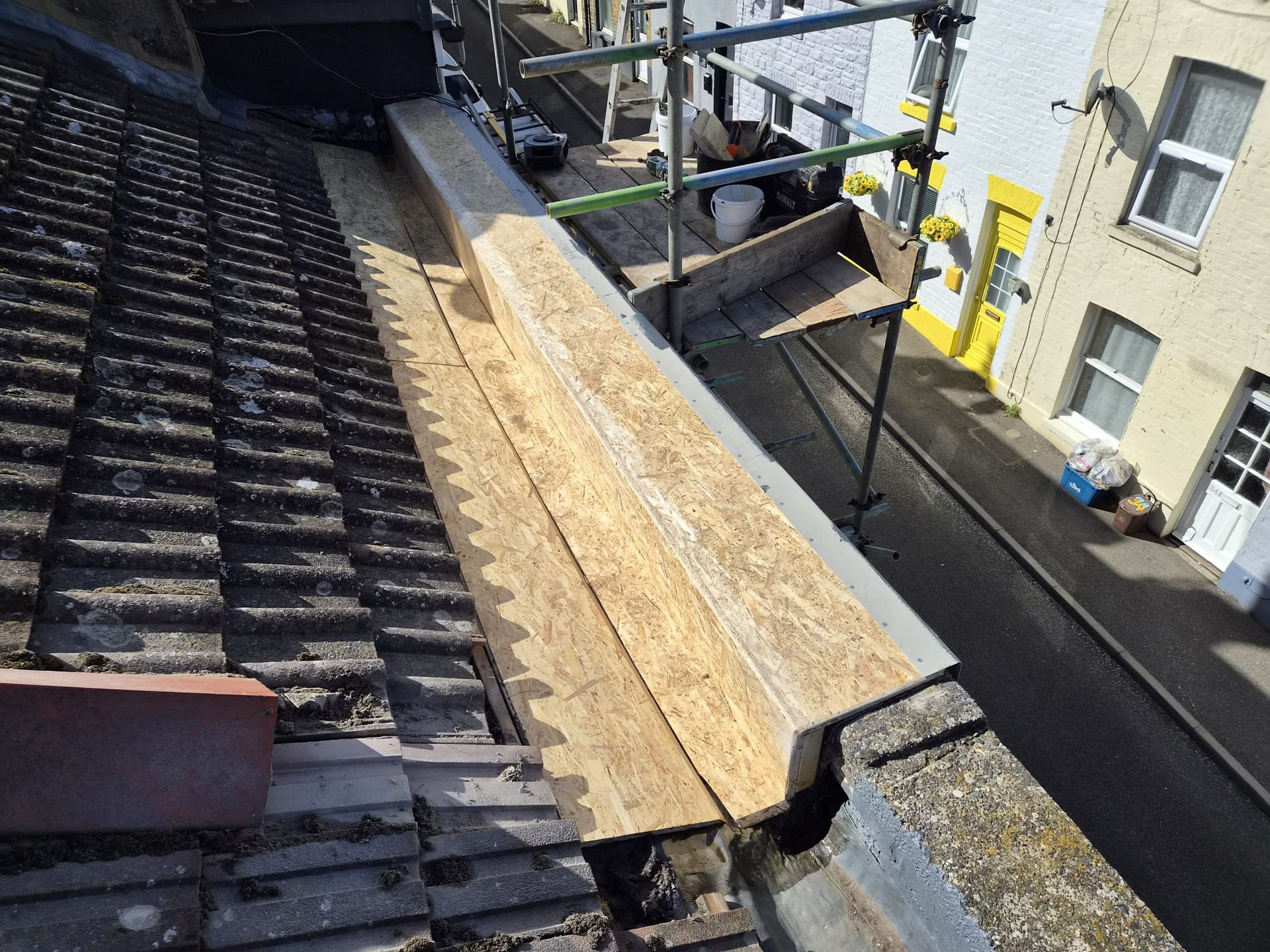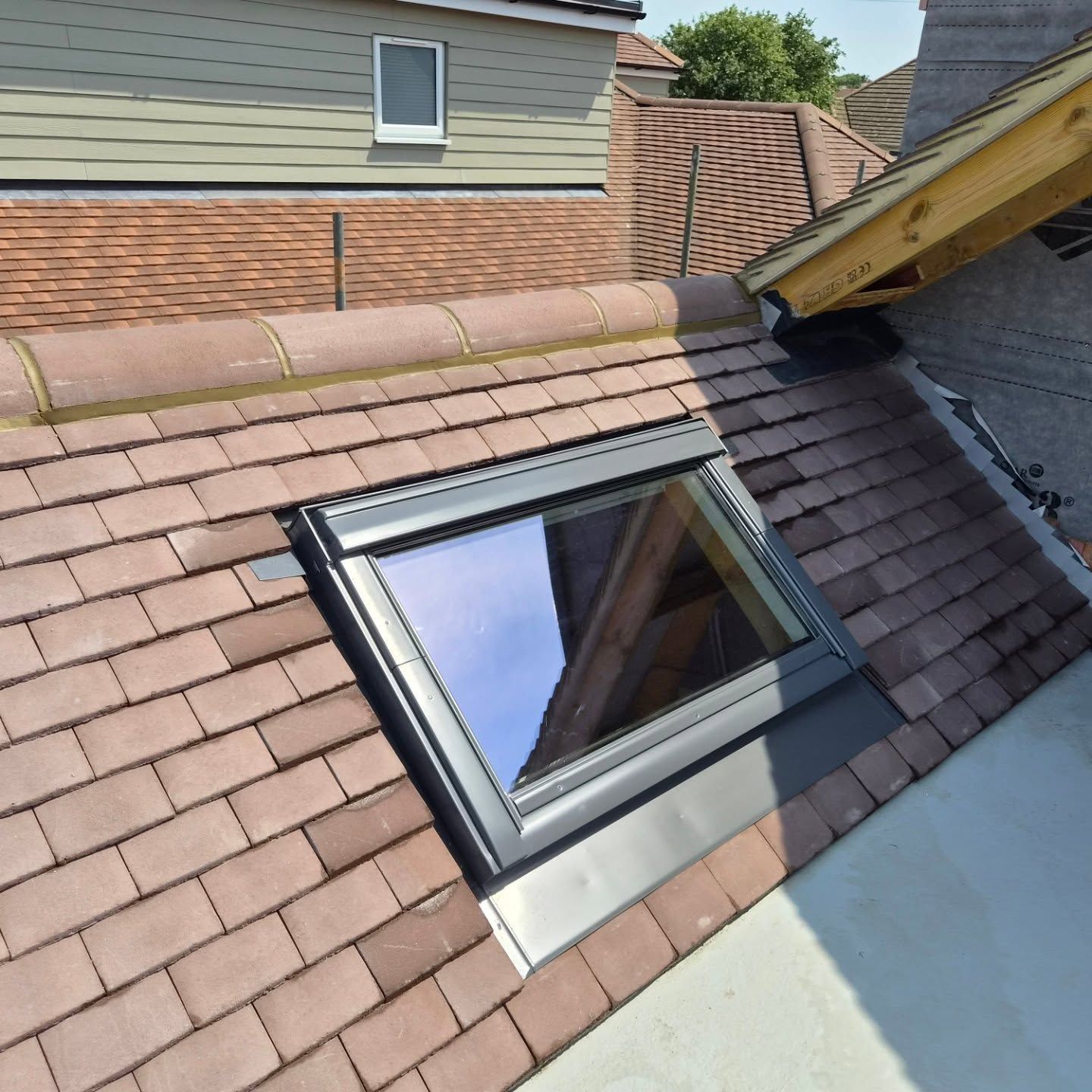
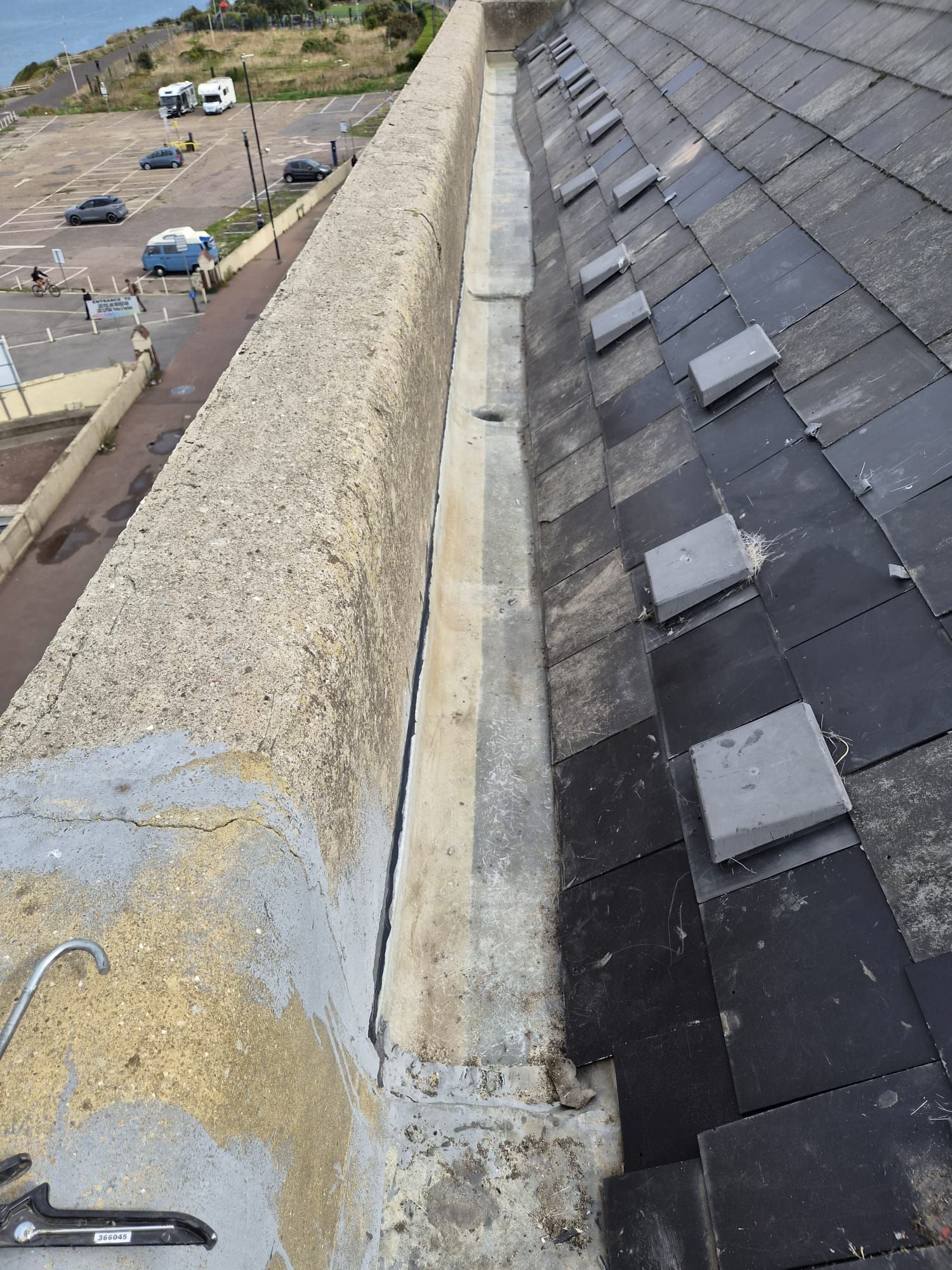
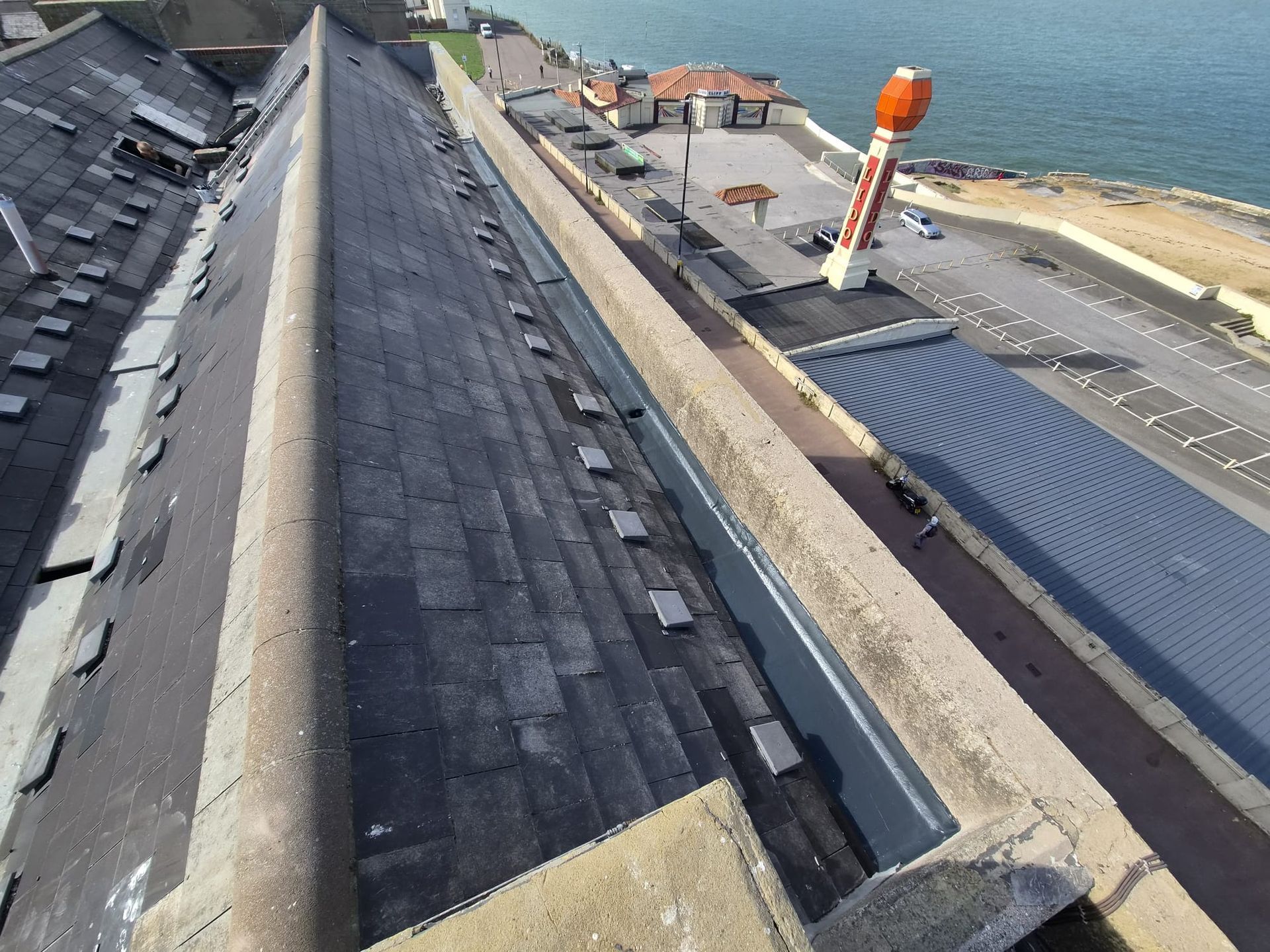
We were up on the roof of one of the big slate-covered buildings along the Cliftonville seafront this month, renewing the valley gutter that runs the full length of the roof against the parapet wall. With the sea on one side and a long slope of slate on the other, it's one of those jobs where the view is hard to beat — but the exposure out here is exactly why this kind of work matters.
Keying Up and Rebuilding the Valley
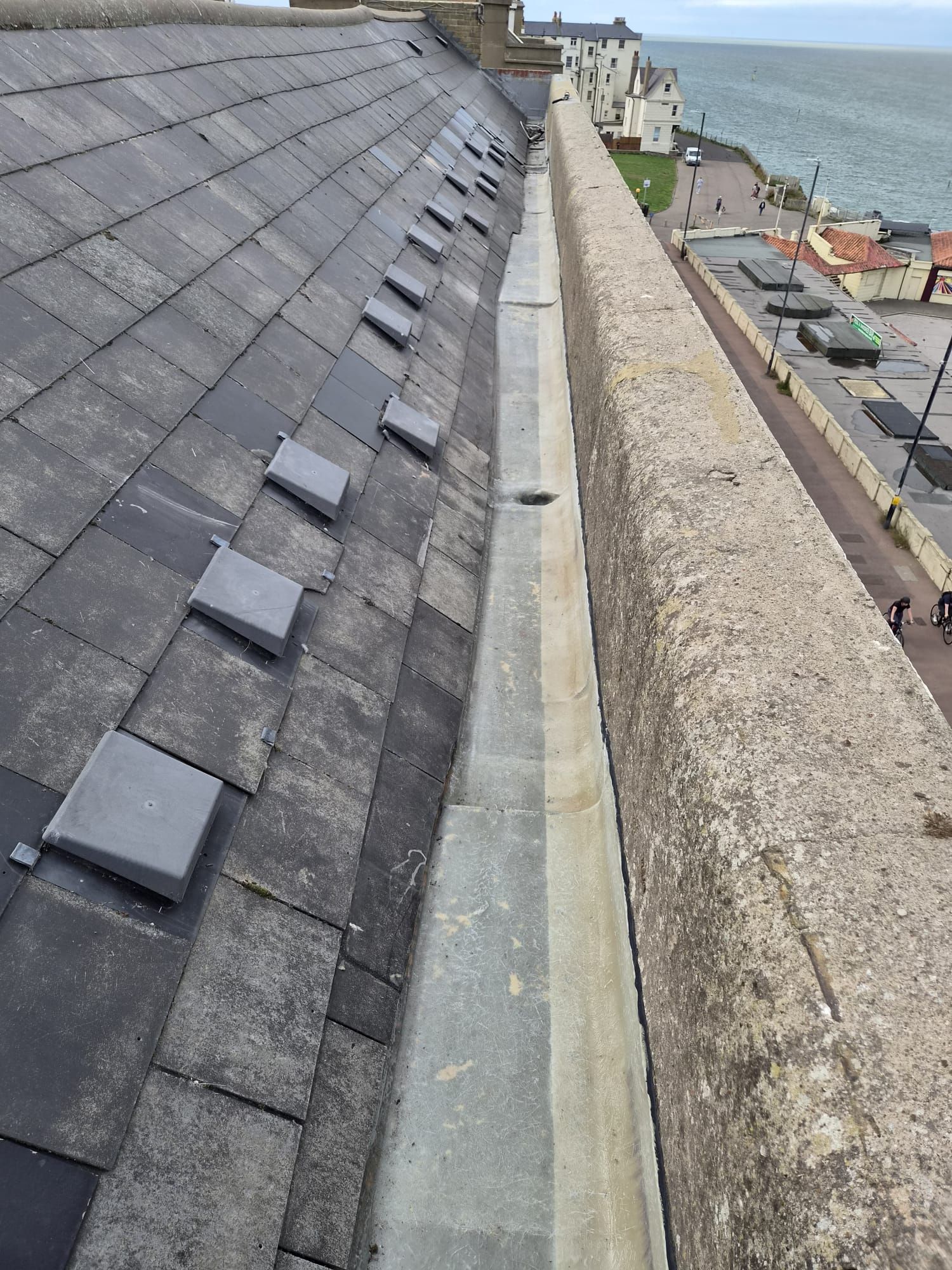
We started by taking up the bottom two courses of slates along the edge of the valley and setting them aside for reuse — no point throwing away good slate when it can go straight back on. With the valley opened up, we keyed up the surface so the new fibreglass would adhere properly, rather than just sitting on top of what was there before.
Raising the Upstand for Extra Protection
One of the main things we changed on this job was the height of the upstand — the raised lip where the valley meets the slates. A higher upstand gives the gutter more capacity before water can creep back up and under the slates, which matters on an exposed site like this one, right on the seafront where wind and driving rain come straight off the water.
Once the new upstand was built up and the fibreglass had gone off, we reinstalled the original slates along the bottom courses and finished the whole run with a top coat, so it's fully sealed and ready for whatever the Thanet coast throws at it.
Fibreglass Valleys, Done Properly
A valley is one of those details that either keeps working quietly for decades or causes problems every time it rains hard, and the difference usually comes down to how it's prepped and finished, not just what it's covered in. All our fibreglass work, including valleys like this one, comes with our personal 20-year guarantee.
If you've got a valley, gutter or flat roof that needs sorting — on the coast or anywhere else in Thanet — get in touch. No obligation, no sales patter, just an honest look at what's going on and what it'd take to put right.